Dental Crowns vs. Veneers in Mesa, AZ

Dental Crowns in San Carlos

Dental Crowns vs. Veneers in Mesa, AZ

July 13, 2026

Dental Health

If your dentist recently said you need a crown, you may have wondered: why not a veneer? Many San Carlos patients ask this exact question. Understanding crowns vs. veneers — and why your dentist recommends one over the other in San Carlos — helps you feel confident in your treatment plan. The answer comes down to clinical factors, not personal preference.

Dr. Ivraj Sandhu at My Dentist Mesa takes a biological and holistic approach to restorative care. That means every recommendation is rooted in preserving your natural tooth structure as much as possible. Let’s break down how these two options differ and when each one makes the most sense.

What Is the Core Difference Between a Crown and a Veneer?

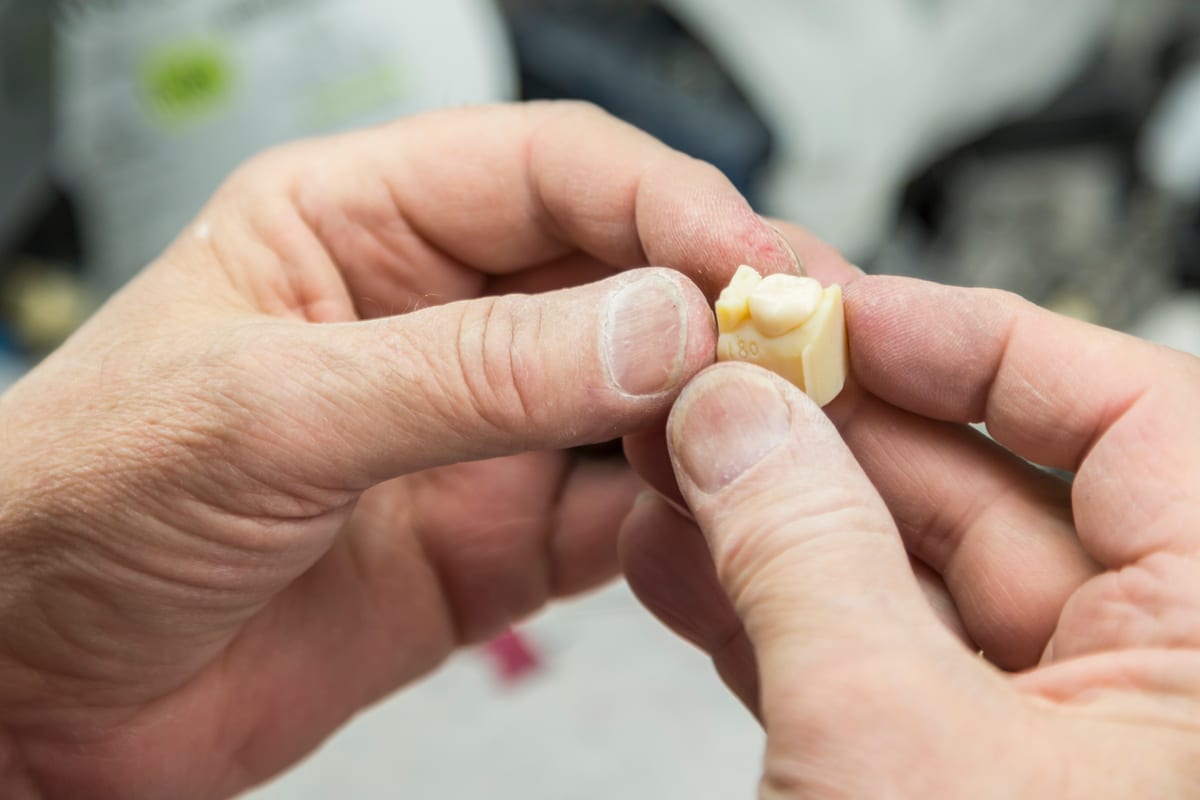
Both crowns and veneers are tooth-colored restorations. However, they cover very different amounts of your tooth. A veneer is a thin shell bonded only to the front surface of a tooth. A crown encases the entire visible tooth — all the way around.

This structural difference is the key to every clinical decision. A veneer preserves more of your natural enamel. A crown requires more tooth reduction but provides full 360-degree protection. Neither option is inherently better — each serves a specific clinical purpose.

Think of it this way: a veneer is like a cover for your tooth’s front face. A crown is like a helmet covering the whole tooth. Your dentist chooses based on how much support your tooth actually needs.

When Crowns vs. Veneers Comes Down to Tooth Damage

The most common reason a dentist recommends a crown over a veneer is the extent of tooth damage. If a tooth has significant decay, large existing fillings, or a crack that extends deep into the structure, a veneer simply cannot provide enough support. The thin layer of porcelain would not hold under normal biting forces.

Here are the situations where a crown is typically the right clinical choice:

  • The tooth has lost more than 50% of its natural structure
  • A large or failing filling already weakens the tooth
  • The tooth is cracked on multiple sides or all the way through
  • The tooth has had a root canal and needs full coverage protection
  • The tooth is a back molar that absorbs heavy chewing pressure

In these cases, a veneer would not bond securely enough. Placing a veneer on a compromised tooth could lead to fracture or failure within a short time.

When Veneers Are the Clinically Appropriate Choice in San Carlos

Veneers shine when a tooth is structurally sound but cosmetically flawed. If a tooth has healthy enamel, minimal decay, and no significant damage, a veneer may preserve far more of your natural tooth. This aligns with the biological dentistry philosophy of doing the least invasive procedure that still achieves a great outcome.

Veneers work well for the following situations:

  • Permanent staining that whitening cannot correct
  • Minor chips or small fractures on front teeth
  • Slight gaps or mild spacing issues between front teeth
  • Teeth that are slightly misshapen but structurally intact
  • Uneven tooth length that affects the smile line

Front teeth are the most common candidates for veneers. They face less biting pressure than back teeth, which makes the thinner coverage of a veneer more durable in that location. A veneer on a healthy front tooth can last 10–15 years with proper care.

The Role of Bite, Location, and Function in the Decision

Your dentist also considers where the tooth sits in your mouth. Location matters significantly. A back molar absorbs 200 to 300 pounds of force per square inch during chewing. A veneer placed there would likely crack or debond quickly. A crown handles those forces without fail.

Front teeth experience much lighter biting forces. This is one reason veneers work well for incisors and canines. However, if a front tooth has been badly damaged or treated with a root canal, even a front tooth may need a crown instead of a veneer.

Your bite alignment also plays a role. Patients who grind their teeth — a condition called bruxism — put extreme stress on restorations. In those cases, a crown’s full coverage offers much better long-term durability than a veneer. Dr. Sandhu will evaluate your bite carefully before making a recommendation.

What to Expect During Your Consultation at My Dentist Mesa

When you visit My Dentist Mesa, Dr. Sandhu does not rush the diagnostic process. He uses digital X-rays and a thorough clinical exam to assess each tooth individually. The goal is always to recommend the most conservative treatment that still protects your long-term oral health.

For patients in the San Carlos area, our Mesa office offers same-day dentistry options that can make the crown process faster and more convenient. You do not always need multiple appointments to complete a crown. In some cases, we can design and place a crown in a single visit.

If a true Dental Emergency arises — such as a cracked tooth causing acute pain — prompt treatment is essential. Delaying care can turn a crown-level problem into a tooth extraction situation. Acting quickly preserves your options.

Our practice also offers Family Dentistry services, so patients of all ages from San Carlos can receive coordinated, personalized care under one roof. Continuity of care helps your dentist track changes over time and catch problems early.

Conclusion: Trust the Clinical Reasoning Behind Your Dentist’s Recommendation

When your dentist recommends a crown over a veneer — or the reverse — there is always a sound clinical reason. It comes down to the amount of remaining tooth structure, the location of the tooth, the forces it endures, and how much protection it truly needs. Understanding this reasoning helps you participate actively in your own care.

Dr. Ivraj Sandhu and the team at My Dentist Mesa are committed to honest, education-first dentistry. Patients from San Carlos and across the Mesa area receive thoughtful recommendations grounded in biology and function — not upselling. Book Now to schedule your appointment with our team.

Frequently Asked Questions

Can I choose a veneer instead of a crown if I prefer less tooth removal?

Your preference matters, but the clinical condition of your tooth is the deciding factor. If your tooth lacks enough healthy structure to support a veneer bond, placing one would risk failure or further damage. Dr. Sandhu will explain exactly why a crown or veneer is recommended in your specific case.

How much natural tooth do dentists remove for a crown versus a veneer?

A veneer requires removing about 0.3 to 0.7 millimeters of enamel from the front surface only. A crown requires reducing the tooth by 1 to 2 millimeters on all sides. Crowns involve more tooth reduction, which is why dentists only recommend them when clinically necessary.

Are crowns or veneers more durable long-term?

Both can last 10 to 15 years or longer with proper care. Crowns typically handle more wear because they cover the entire tooth. Veneers are durable on front teeth but are not designed for high-pressure chewing areas. Your oral hygiene habits and bite patterns affect the longevity of either restoration.

Do veneers look more natural than crowns?

Both modern crowns and veneers are made from high-quality porcelain that mimics natural tooth color and translucency. When placed by an experienced dentist, both restorations blend seamlessly with surrounding teeth. The aesthetic result depends more on the dentist’s skill and materials than on which type of restoration is used.

What happens if a tooth is too damaged for either a crown or a veneer?

If a tooth has deteriorated beyond what a crown can restore, extraction may be the only remaining option. In those cases, Dr. Sandhu would discuss tooth replacement options such as dental implants to restore your bite and smile function. Early treatment almost always prevents reaching that point.

Dental Crowns in San Carlos

July 13, 2026

Dental Health

If your dentist recently said you need a crown, you may have wondered: why not a veneer? Many San Carlos patients ask this exact question. Understanding crowns vs. veneers — and why your dentist recommends one over the other in San Carlos — helps you feel confident in your treatment plan. The answer comes down to clinical factors, not personal preference.

Dr. Ivraj Sandhu at My Dentist Mesa takes a biological and holistic approach to restorative care. That means every recommendation is rooted in preserving your natural tooth structure as much as possible. Let’s break down how these two options differ and when each one makes the most sense.

What Is the Core Difference Between a Crown and a Veneer?

Both crowns and veneers are tooth-colored restorations. However, they cover very different amounts of your tooth. A veneer is a thin shell bonded only to the front surface of a tooth. A crown encases the entire visible tooth — all the way around.

This structural difference is the key to every clinical decision. A veneer preserves more of your natural enamel. A crown requires more tooth reduction but provides full 360-degree protection. Neither option is inherently better — each serves a specific clinical purpose.

Think of it this way: a veneer is like a cover for your tooth’s front face. A crown is like a helmet covering the whole tooth. Your dentist chooses based on how much support your tooth actually needs.

When Crowns vs. Veneers Comes Down to Tooth Damage

The most common reason a dentist recommends a crown over a veneer is the extent of tooth damage. If a tooth has significant decay, large existing fillings, or a crack that extends deep into the structure, a veneer simply cannot provide enough support. The thin layer of porcelain would not hold under normal biting forces.

Here are the situations where a crown is typically the right clinical choice:

  • The tooth has lost more than 50% of its natural structure
  • A large or failing filling already weakens the tooth
  • The tooth is cracked on multiple sides or all the way through
  • The tooth has had a root canal and needs full coverage protection
  • The tooth is a back molar that absorbs heavy chewing pressure

In these cases, a veneer would not bond securely enough. Placing a veneer on a compromised tooth could lead to fracture or failure within a short time.

When Veneers Are the Clinically Appropriate Choice in San Carlos

Veneers shine when a tooth is structurally sound but cosmetically flawed. If a tooth has healthy enamel, minimal decay, and no significant damage, a veneer may preserve far more of your natural tooth. This aligns with the biological dentistry philosophy of doing the least invasive procedure that still achieves a great outcome.

Veneers work well for the following situations:

  • Permanent staining that whitening cannot correct
  • Minor chips or small fractures on front teeth
  • Slight gaps or mild spacing issues between front teeth
  • Teeth that are slightly misshapen but structurally intact
  • Uneven tooth length that affects the smile line

Front teeth are the most common candidates for veneers. They face less biting pressure than back teeth, which makes the thinner coverage of a veneer more durable in that location. A veneer on a healthy front tooth can last 10–15 years with proper care.

The Role of Bite, Location, and Function in the Decision

Your dentist also considers where the tooth sits in your mouth. Location matters significantly. A back molar absorbs 200 to 300 pounds of force per square inch during chewing. A veneer placed there would likely crack or debond quickly. A crown handles those forces without fail.

Front teeth experience much lighter biting forces. This is one reason veneers work well for incisors and canines. However, if a front tooth has been badly damaged or treated with a root canal, even a front tooth may need a crown instead of a veneer.

Your bite alignment also plays a role. Patients who grind their teeth — a condition called bruxism — put extreme stress on restorations. In those cases, a crown’s full coverage offers much better long-term durability than a veneer. Dr. Sandhu will evaluate your bite carefully before making a recommendation.

What to Expect During Your Consultation at My Dentist Mesa

When you visit My Dentist Mesa, Dr. Sandhu does not rush the diagnostic process. He uses digital X-rays and a thorough clinical exam to assess each tooth individually. The goal is always to recommend the most conservative treatment that still protects your long-term oral health.

For patients in the San Carlos area, our Mesa office offers same-day dentistry options that can make the crown process faster and more convenient. You do not always need multiple appointments to complete a crown. In some cases, we can design and place a crown in a single visit.

If a true Dental Emergency arises — such as a cracked tooth causing acute pain — prompt treatment is essential. Delaying care can turn a crown-level problem into a tooth extraction situation. Acting quickly preserves your options.

Our practice also offers Family Dentistry services, so patients of all ages from San Carlos can receive coordinated, personalized care under one roof. Continuity of care helps your dentist track changes over time and catch problems early.

Conclusion: Trust the Clinical Reasoning Behind Your Dentist’s Recommendation

When your dentist recommends a crown over a veneer — or the reverse — there is always a sound clinical reason. It comes down to the amount of remaining tooth structure, the location of the tooth, the forces it endures, and how much protection it truly needs. Understanding this reasoning helps you participate actively in your own care.

Dr. Ivraj Sandhu and the team at My Dentist Mesa are committed to honest, education-first dentistry. Patients from San Carlos and across the Mesa area receive thoughtful recommendations grounded in biology and function — not upselling. Book Now to schedule your appointment with our team.

Frequently Asked Questions

Can I choose a veneer instead of a crown if I prefer less tooth removal?

Your preference matters, but the clinical condition of your tooth is the deciding factor. If your tooth lacks enough healthy structure to support a veneer bond, placing one would risk failure or further damage. Dr. Sandhu will explain exactly why a crown or veneer is recommended in your specific case.

How much natural tooth do dentists remove for a crown versus a veneer?

A veneer requires removing about 0.3 to 0.7 millimeters of enamel from the front surface only. A crown requires reducing the tooth by 1 to 2 millimeters on all sides. Crowns involve more tooth reduction, which is why dentists only recommend them when clinically necessary.

Are crowns or veneers more durable long-term?

Both can last 10 to 15 years or longer with proper care. Crowns typically handle more wear because they cover the entire tooth. Veneers are durable on front teeth but are not designed for high-pressure chewing areas. Your oral hygiene habits and bite patterns affect the longevity of either restoration.

Do veneers look more natural than crowns?

Both modern crowns and veneers are made from high-quality porcelain that mimics natural tooth color and translucency. When placed by an experienced dentist, both restorations blend seamlessly with surrounding teeth. The aesthetic result depends more on the dentist’s skill and materials than on which type of restoration is used.

What happens if a tooth is too damaged for either a crown or a veneer?

If a tooth has deteriorated beyond what a crown can restore, extraction may be the only remaining option. In those cases, Dr. Sandhu would discuss tooth replacement options such as dental implants to restore your bite and smile function. Early treatment almost always prevents reaching that point.